


Hammer drills also known as rotary hammers are powerful tools that are commonly used in construction and renovation projects. They are specifically designed to drill through hard materials such as concrete, brick, and stone. These drills use a combination of rotary and hammering action to create a hole in the surface. In this blog post, we will explore their features, benefits, and applications.
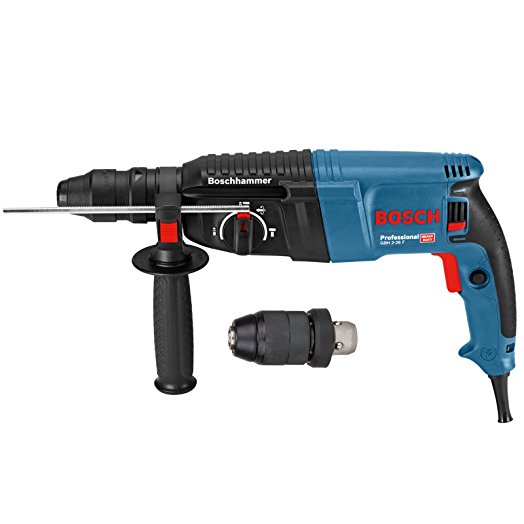
FEATURES OF A HAMMER DRILL
Hammer drills are available in different sizes and configurations, with each type designed for specific applications. Some of the common features of hammer drills include:
Chuck size; the chuck size of a hammer drill determines what size of drill bit to be used. For example, the chuck for GBH 2-20 DRE fits SDS plus bits while the chuck for GBH 5-40 D fits SDS max bits.
Power; Hammer drills come in both corded and cordless varieties, with corded drills typically more powerful than cordless ones. An example of a cordless hammer drill is GBH 180 LI. The power of a hammer drill is measured in Watts for corded drills and volts for cordless hammer drills.
Speed; Hammer drills typically have variable speed settings that allow you to adjust the speed of the drill to match the material you are drilling. Higher speeds are generally used for softer materials, while lower speeds are used for harder materials.
Hammering action; Hammer drills use a hammering action to break up hard materials while drilling. The hammering action is measured in beats per minute (BPM), with higher BPMs providing more power.
BENEFITS
There are several benefits to using a hammer drill. These include;
- Efficiency; Drilling using hammer drills is much faster and more efficient than using traditional means, making them ideal for large-scale drilling projects.
- Versatility; Hammer drills can be used on a variety of materials, including concrete, brick, and stone, as well as metal and wood for those drills with a double chuck such as GBH 2-24 DFR
- Precision; Hammer drills are designed to create precise holes in hard materials, making them ideal for construction and renovation projects.
- Durability; Hammer drills are built to withstand heavy duty use and are designed to last for years.
APPLICATIONS
- Construction: Hammer drills are commonly used in construction projects to drill holes in concrete and other hard materials.
- Renovation: Hammer drills are also used in renovation projects to create holes for wiring, plumbing, and other installations.
- DIY Projects: Hammer drills are also popular among DIY enthusiasts who need to drill holes in hard materials for various projects.
- Mining and Quarrying: Hammer drills are also used in the mining and quarrying industry to drill blast holes for explosives.
CONCLUSION
Hammer drills are essential tools for anyone involved in construction, renovation, or DIY projects. They are efficient, versatile, and precise, making them ideal for drilling through hard materials. With the right hammer drill and drill bit, you can create precise holes in concrete, brick, and stone with ease.
Leave a reply
You must be logged in to post a comment.